

Agency in the Age of Convenience

Updated: Jul 1
Making the case for rewilding the domesticated human

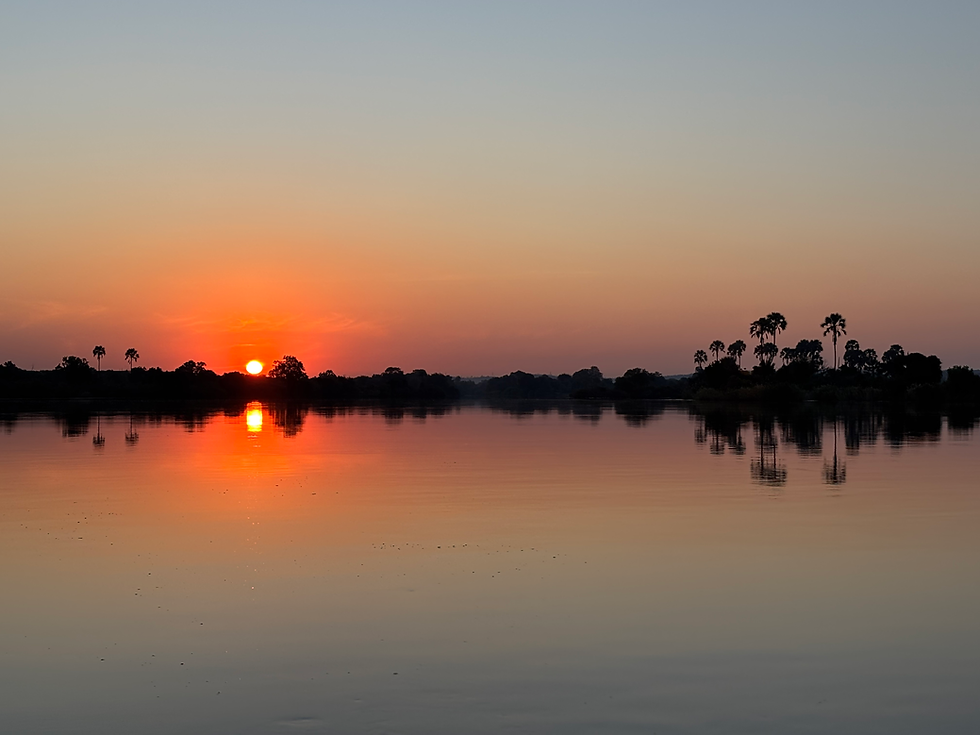
On a recent walk in the Zimbabwean Bush our guide asked the question, ‘what is the difference between a wild and domestic animal?’ After contemplating for some time, each of us had come up with our own elaborate answer. In the end he announced, in his view it was simple: ‘Wild animals are scared of humans, domesticated animals are not.’ Whilst I liked his simplified take on the matter, I couldn’t help noting that keeping lions as pets had been all the rage in the 70’s, those lions were no longer scared of humans, so were they still considered wild animals? Curiosity caught the better of me and on returning home I embarked on a little research project of my own. I quickly descended down the rabbit hole of domestication processes. But it was the ‘self-domestication’ of humans that really piqued my interest. We were wild once too. In fact, as a species we have been wild for far longer than we have been tame. So what did we gain through the process of self-domestication, and what have we lost by giving up our wild ways? Come tumble with me a little.
A process of evolution
The domestication of animals and plants is a foundational pillar of progress in human civilization. The process happens over time, with changes in physiology, psychology and behavior taking place due to manipulation and control of a species, by human beings. In some instances there was a mutual benefit derived from the domestication process. But for the most part, it was for the benefit of humans. Animals and plants were viewed as a resource, selected to provide food and labour. And on occasion, animals were chosen for companionship. The genetic coding of these animals and plants changed over generations, and they became dependent on humans.
The notion of self-domestication first arrived around the time of Darwin’s theory of evolution. The hypothesis goes that the self-domestication of humans unfolded so that we could live in a more cooperative way. The overtly aggressive were weaned out, and those with social behaviours linked to collaboration survived. Our physical features adapted to fit this newly domesticated existence. Initially our species benefited from this taming. But as we have progressed, and new systems and orders have been established, we have moved away from self-domestication. Instead we are being domesticated by man imagined systems. By religion, institutions and government. By the corporations and structures that emerged in the industrial revolution. And now, in the 21st century, consumerism has shifted the process into overdrive. It has beguiled us in the most seductive way.
Groomed by convenience
Yes, it has never been a more convenient time to be alive. The new titans of industry have taken it upon themselves to deliver us from friction. And what an incredible job they’ve done. For most of the world, we can now access anything our heart desires, at the speed of light, any time of day or night, with a discount to boot. We no longer have to visit a bank, a clothing store or even a super market. There’s an app for that instead. We have algorithms that appear to personalise (manipulate) and streamline every experience for us, from what we purchase, to who we follow. Who we listen to and what we read. What we believe and who we date. And of course, we now have large language models that write our love letters for us, confirm every opinion we have and remind us what geniuses we are, as they build our future-proof business plan for the latest idea in seconds. With just a click of the button here and a swipe on an app there, it’s done. You never have to move a muscle.
Convenience has whispered sweet nothings into our tired, overwhelmed ears and promised to unburden us. How could we refuse? For this is also the age in which we don’t have a minute to spare or a second to waste. It will cost us dearly. Every choice - of which there are now copious amounts - carries an unwelcome mental load. So we’ve embraced convenience and outsourced it all, without taking the time to fully comprehend the consequences of our frictionless life. We are pitched the narrative that humans alive today have never had it better, meanwhile rates of depression continue to escalate. The math ain’t mathing, as they say. Convenience comes at a cost.
Rewriting biology
Let’s first look at it from a physical perspective with a quick biology lesson on D.O.S.E. - dopamine, oxytocin, serotonin and endorphins - otherwise known as our ‘hormones of happiness’. These four feel-good chemicals each have their own way of bringing about joy to the human experience. Dopamine - the one we hear most about today - arrives as a reward for our hard work and is linked to motivation and pleasure. Oxytocin - the love hormone - helps us bond and arrives when we hug, dance, touch and connect with each other and the world around us. Serotonin - the mood booster and stress reliever - is our natural antidepressant and arrives through exposure to sunlight and exercise. Lastly, endorphins - our natural pain relievers - arrive after physical exertion or heightened emotions (think about how you feel after a workout or a good cry). They are all interlinked and together provide a roadmap to joy, with our mind and body as a vehicle to get us there.
But alas, it has been hijacked and we have handed over the reins. Our dopamine hits used to be hard earned. They were sacred. Now they are mainlined into our system. We no longer require motivation to receive our reward. It’s served up to us on a platter. Meanwhile oxytocin levels have plummeted because we have silenced our conversation with the living world and severed our proximity to touch. Our daily dose of sunshine has been traded in for neon white light, and relational living replaced by a rampant performative lifestyle, leaving serotonin working over time and unable to keep up. So much so that there is now a thriving SSRI (Selective Serotonin Reuptake Inhibitor) industry. Endorphins, well, they have taken a back seat, with all the dopamine flooding our system these days, they don’t get much of a look in.
The illusion of an easier life has us willfully allowing the system of convenience to redraw the biological map for humans to access joy. We are so overloaded with access and possibility, we have failed to recognise that when we remove all friction and contact with the living world from our lives, we limit our access to feeling Alive. You know that one you get when you cross a finish line and take that first sip of beer after a gruelling trail run. Or you pick flowers and vegetables you’ve grown in your garden. Or cook a meal for loved ones, then sit around a table, share and laugh with one another. Or you come across a wild animal you have been tracking on foot in the bush. Or, you see a shooting star (feel free to replace with whatever speaks to you). The point is, we are biologically wired for active participation in the physical world and a little dose of friction goes a long way to bringing meaning alive in our lives.
Estranged from life
From a metaphysical perspective, the process of domestication has led us down a path of alienation. In forgoing our wild nature (almost entirely) we have become detached from what it means to be human. We have relinquished some of our most prized ‘possessions’: our ability to pay attention - the most generous of gifts we have to bestow upon the world - is now squandered on algorithms and bots; our ability to imagine - a unique aspect of human intelligence, the place from which the human story emerged, and that of the universe - is now outsourced to machines that regurgitate the past; our consciousness - which was ever expanding, allowing us to understand more, feel more, be more - has now been diluted and polluted by fear; and last but not least, our agency - we have surrendered to the notion that we are powerless to the outcome of any of this. It is precisely this limiting belief - that we have no choice - that our domesticators rely on to keep us passive. But, this is only a notion, not a truth, and one that can be dispelled when we bring awareness to it.
I am not highlighting all of this to pass judgement, or place us in the role of victim. Yes, we have been complicit in handing over the reins. But life these days is all consuming. The overwhelm we feel is real. The guilt, the grief, the pressure - it is debilitating. So the thought of having to expend more energy or experience discomfort, is understandably not welcomed with open arms. Especially when we feel alone in making the choices and carrying the weight of its outcomes. Perhaps it's time we can take a leaf out of our wild past here.
Tracking our way back
There is a Southern African philosophy called Ubuntu, which translates to, ‘I am because you are’. This is a resonant echo of how our wild ancestors used to live - in a deep relationship of reciprocity with the living world. Their existence was interdependent with it. There was no separation. They knew which plants would nourish them and which would kill them. They knew intimately the animals they hunted for food. They navigated with night skies and sunsets. They they paid attention and were guided by their instinct. They understood and felt the consequence of ignorance. And they lived in community, for isolation was a death sentence.
What might it look like if we modern day humans chose to invoke some of our ancestor’s ways of being - if we embraced the philosophy of ubuntu, in small, tangible ways? We might chose to notice where the sun rises and where it sets on the horizon from one season to another. Or we might work a little harder to earn our food, and trace it's origins. We could join a local food club - even start one ourselves - perhaps even get to know the farmer. We might seek out opportunities to sit around fires, under open night skies, telling old stories, and listening to new ones, imagined in the moment. Or, we might choose to open ourselves to a little more risk, discomfort, failure and heartbreak - knowing that the suffering this brings reminds us of the privilege of being alive. There are a million different ways to invoke some wild nature in our modern lives. And when we do, bit by bit, moment by moment, choice by choice, we find our way out of isolation and we fall back into a Real relationship with the living world around us.
Whether consciously or unconsciously, we are each individually participating in the shaping of what it means to be human, both now, and in the future. Where our attention goes, how we spend our time, and whether we actively choose to participate in life, not only has an effect on the way we encounter life now, but on how the human experience will unfold in the generations to come. This may sound like hyperpole, but, every day we make choices that alone may seem small and insignificant, but over time - whether positive or negative - accumulate, and the biological make up of our species follows suit. We can continue on a path of being an overworked, disconnected, languishing, animal - a resource that consumes for the benefit of a late capitalist master. Or, we can choose to walk more on the wild side of life, embracing moments of both joy and discomfort, and welcoming home the aliveness it brings. Friction and all.
I know which path I’m going to choose.


Beautiful, Debs! Bravo